The short version
GEO, generative engine optimisation, is the work of being named and cited in the answers of AI assistants. SEO is the work of being found in a search engine’s results. Assistants that answer with web search on are built on top of search, so the two overlap more than the new name suggests.
| SEO | GEO | |
|---|---|---|
| What the person types | A few words | A sentence or a paragraph, with their situation in it |
| What they get back | A ranked list of pages | One written answer, with a few brands and some sources |
| What you want | A high position and a click | To be named, ideally first, and to have your page cited |
| How stable it is | The same query gives broadly the same list for days | The same question can give a different answer each time |
| What you can measure | Positions, impressions, clicks, search volume | Answers you collect yourself, prompt by prompt |
What carries over
Being reachable. An assistant that searches the web can only use pages its search can find and its crawler may read. Indexing, a sitemap, sensible robots.txt rules and pages that load are as basic for GEO as for SEO. A site can block an AI crawler without meaning to; Teddit shows each crawler’s access on the Pages screen (see AI crawler access).
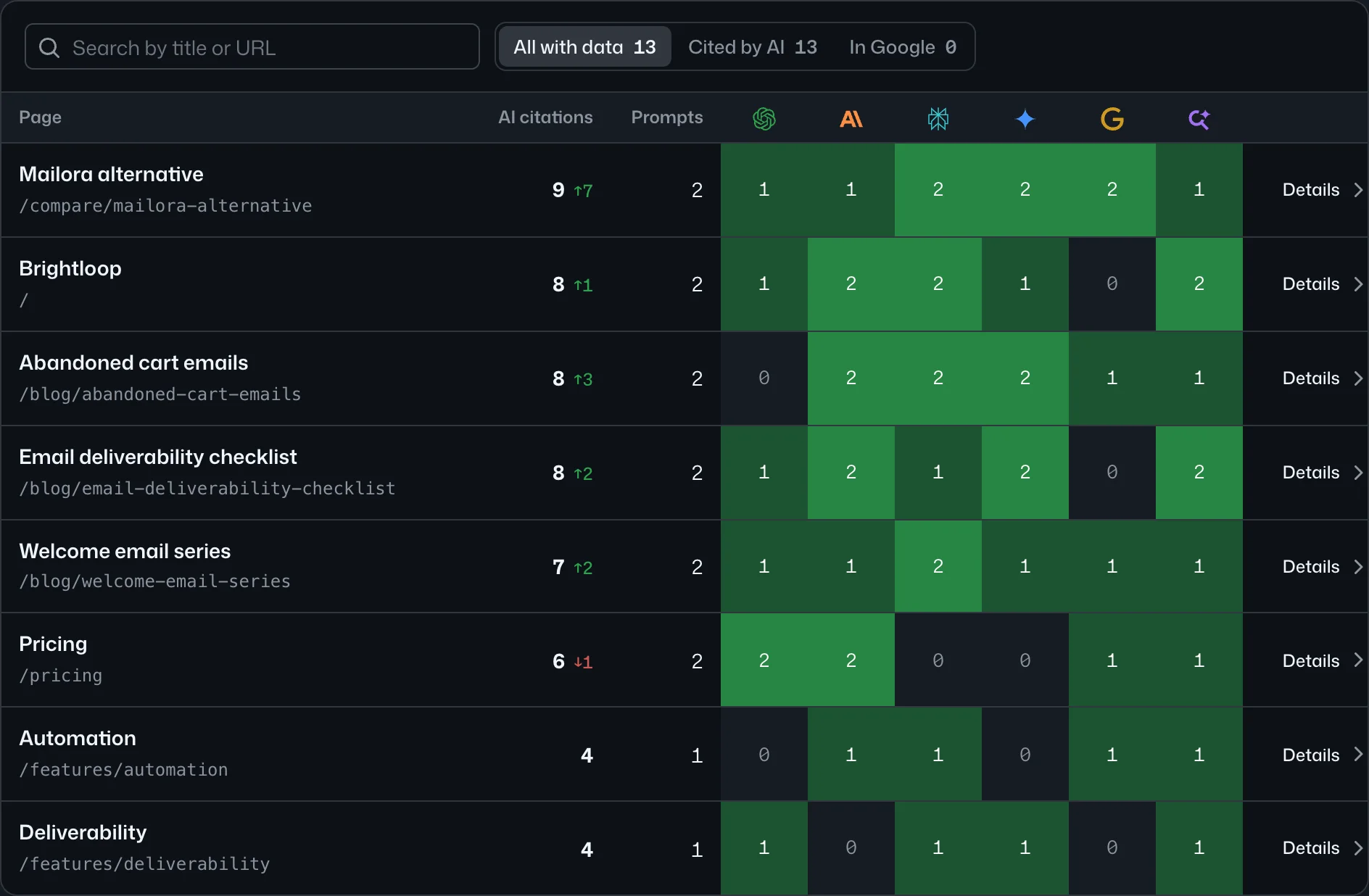
Ranking, for different queries. The assistant searches with queries it writes itself. If your page ranks for those queries, it is among the pages the assistant can choose from. Classic ranking work still pays off, but you need to know which queries matter. Teddit keeps the searches each assistant ran and shows where your pages rank in Google for them on the Pages screen.
Pages that answer a specific question. Search engines have rewarded pages that match the intent of a query for years. Assistants work the same way, only with longer and more specific questions. A page that says plainly which problem it solves, for whom and with what result is easier to use as a source.
What others say about you. Review sites, directories, comparison articles and press coverage were always part of search. For assistants they matter at least as much, because a round-up that lists five firms is exactly the kind of page an assistant reads before it names five firms.
What does not carry over
Positions. There is no position 3 in an answer. You are named or not, before or after your competitors, linked or not. Those are separate facts, and they need separate measures. We explain the ones Teddit uses in Named, named first, linked.
The click as the goal. A buyer can read an answer, take your name from it and never click anything. Being named without a link is still a result, and being linked without being named is a weaker one than it looks. Traffic from assistants tells you little about how often you were recommended.
Keyword lists. Search volume data covers what people type into search engines. There is no reliable public equivalent for what people ask assistants. You choose the questions yourself, from what buyers say on sales calls, in support tickets and in demos. We wrote about that in How to choose the prompts worth tracking.
A ranking you can check once. A search result for a keyword holds still long enough to look at. An answer is a sample: the same question asked tomorrow can name other brands. A single check proves little, so measurement has to be repeated on a schedule and read as a trend.
One engine. SEO mostly means one search engine per market. GEO means several assistants built by different companies, each with its own model and its own way of searching. They often disagree, and an average across them hides which one moved.
How the measures map
If you report on SEO today, these are the closest equivalents. None of them is a perfect match.
| In SEO you report | The closest GEO measure |
|---|---|
| A keyword you track | A prompt: the full question, asked the same way every time |
| Position | Named, and your place among the brands you track |
| Visibility or impression share | The share of answers that name you, and your share of voice against competitors |
| Landing pages that rank | Pages of your site the answers link to, and for which prompts |
| Ranking changes | Prompts where an assistant started or stopped naming you, over several scans |
Who should own it
In most teams the people best placed to work on GEO are the ones already doing SEO and content. The skills overlap: knowing what buyers ask, writing pages that answer it, getting covered by the sites that matter in the category. What is new is the measurement, and a habit of reading the actual answers rather than a single score.
Teddit is a measuring tool. It collects the answers, the sources and the searches on a schedule and counts what happened. It does not tell you what to change. For that, connect your own AI through the MCP server and let it read the data with everything else it knows about your business, or read the answers yourself. The quick start takes you from sign-up to the first scan.